
What I learned using Codex the past two months
Yes, I know, I’m not the first one to be blown away...

I’m probably the 1,000,000th person to write about how AI coding tools have changed the way he works (I’m personally using Codex), but nevertheless, here is my contribution to this long list 😜.
I’ve been building/maintaining a tool that helps me create competitive landscapes for some months now. The idea is basically to have a tool that helps me create visual competitive landscapes where I can see the list of companies in different categories and, for each company, a list of the important events in terms of product, HR/recruiting, funding, and GTM that it has experienced over the past couple of months.
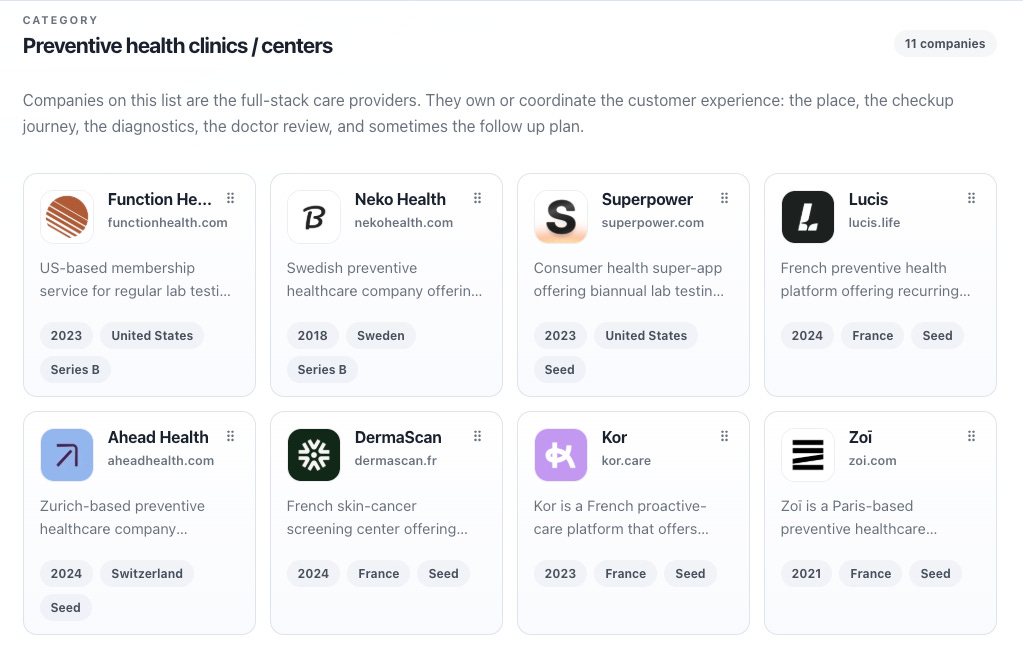
I’m using this tool mainly for two things:
To assess startups/opportunities in specific markets.
To monitor the market evolution for the startups I’m following and try to make the right strategic decisions before it’s too late.
I built this tool with Bubble (a traditional no-code software) and used ChatGPT in parallel (and more specifically its AI agent mode) to create the content of each map that I was adding manually on Axomap. So there was still a lot of manual work to do to create and maintain these competitive landscapes. On top of that, creating new features for the software itself was tedious because of the no-code tool limitations.
Last month I decided to rebuild this software from scratch using OpenAI Codex, with the aim of making the experience almost completely agentic. And fast forward one month of work later, I have a running product which is hundreds of times better than the original:
Market landscape creation is now agentic: I feed a couple of company URLs, a description of the market I’m interested in, and an agent will create a first draft of the competitive landscape populated with relevant startups.
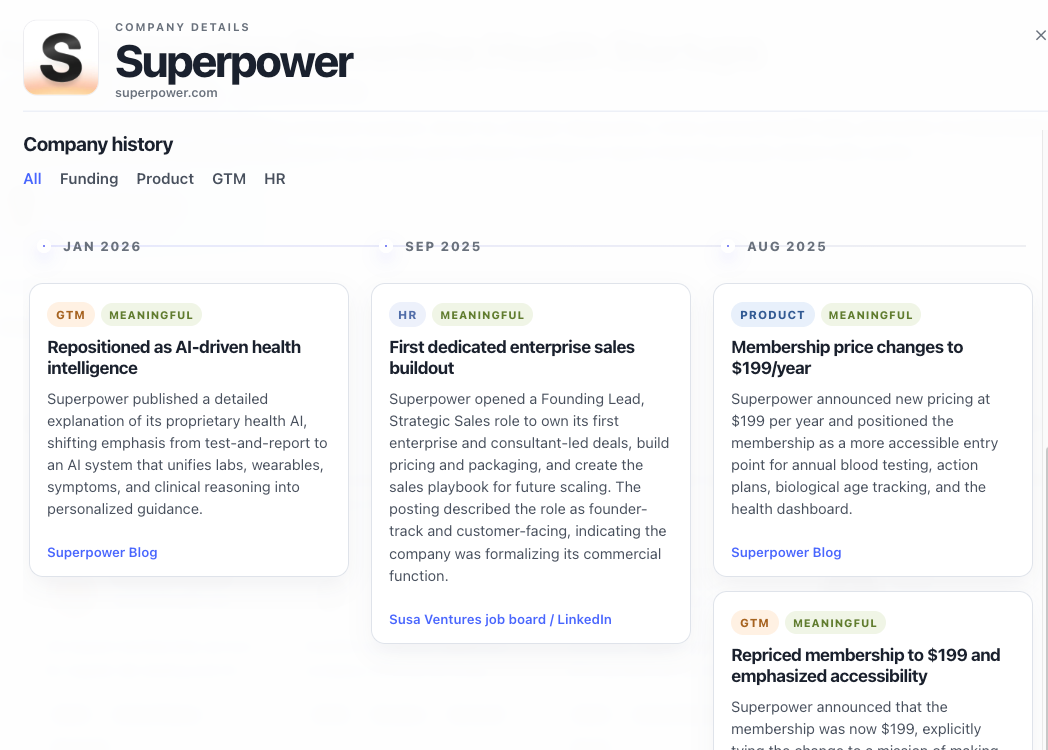
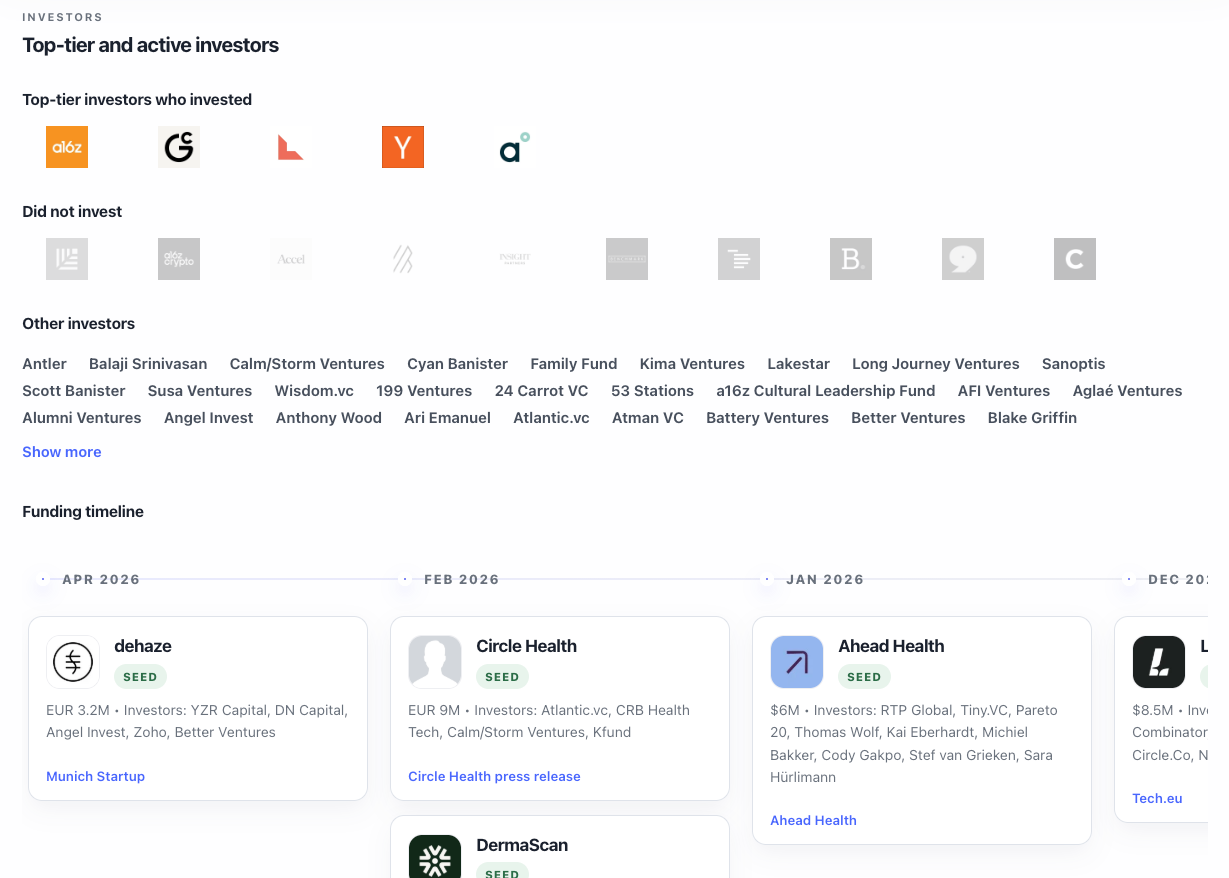
Company profiling is now agentic: With a click of a button, I can launch a series of AI agents that will search and collect the major product, HR, funding, and GTM information of a startup from the past 2 years and display it on a timeline.
Company assessment is now agentic: Once the company profiling is done, a series of agents will write a short assessment of the evolution of the startup over the past couple of months.
Company dynamics is also agentic: A bunch of agents monitor the public signals my agents collect and create a “Momentum” score to surface when activity on a particular aspect accelerates compared to what it was in the past (ex: acceleration of new features released, job postings, new funding round, etc.).
The entire experience is now mostly agentic and it’s truly amazing to see. It basically not only quickens what I was doing before, it literally enables me to do things I could not do. In basically 10-20 minutes I can generate a landscape that would have required me tens of hours of manual work. So I can focus more on analysis and decision making.
Now, to be aware of:
A lot of things still need to be improved and are not perfect. For example, the landscapes created by agents are far from complete and the sourcing agent still misses important startups (that I can add myself). Same with the profiling or assessment agents. They are far from perfect, but there are million ways to improve them.
Yes, AI makes mistakes and hallucinates. But it’s the role of humans to check it. AI is here to provide you a basis and it’s up to me to check the landscapes and detect/correct what is wrong.
I’m still a beginner and have a lot of things to learn. I don’t pretend I’m an expert now. I still have a lot of things to learn and mistakes to make, but it’s also a refreshing aspect of it. Everything is new and I need to explore plenty of things!
But clearly, this is an eye opening/game changing experience for me.
What building with Codex taught me
Like the millionth person who wrote about their eye opening experience, here are my comments and personal realizations from going through this phase (which can be useful for people working in investment funds).
Personal software is definitely the future of software. Axomap is the perfect example of this trend. If there’s one thing I learned working in VC firms, it’s that everyone is different when it comes to searching markets and assessing startups. Some people do very few of these things and mostly base their decisions on their gut feeling, while others will do extensive market research, others want to talk to a lot of people in a specific field, etc. There’s not one way of doing your work but plenty. And AI code generation tools enable anyone to create tools to support their way of working. For me, understanding a market in terms of existing companies and their dynamics is the way to go. But all the other ways of doing this work can be enhanced by personal software, I have no doubt about it.
Software should be thought of as a consumable and not only a long term product. Maybe one aspect that I saw fewer people writing about is how this experience made me realize that the mental model we should have about software should change. In the previous world, we thought of software as something that required time and investment to build. Like a house, you need to make sure it has the characteristics you want and make sure you build it properly because you will use it for a long time (commitment aspect). With personal software and AI code generation tools, the mental model is totally different. I now think of software as something I can build and throw away. In parallel with Axomap, which is kind of my traditional long term software, I have built several other tools that I have used for specific occasions and will probably never use again. And it’s totally fine, it’s precisely what Codex enables me to do. Building software is now like creating a spreadsheet or a Google Doc: You will create plenty of them and often use them once or twice only.
The VC job is changing and will never be the same again. There’s no doubt in my mind that if I had to apply to a VC job or if I had to recruit a junior person, I would look at things completely differently. I would definitely prioritize creativity and the ability to embrace AI coding tools in a candidate above everything else now. The job itself doesn’t change: a VC needs to build conviction about a company in order to invest in it. But the way to build conviction and to cover the market is changing for sure. As a quick example, I created an MCP server to connect my Axomap landscapes to my ChatGPT account. That way, before I discuss with a founder, I can ask questions on ChatGPT about the startup’s approach to the market, its differentiation compared to the existing players, the potential next product moves, their GTM strategy etc. And it gives me a list of great questions and topics to dive into with the founders during the meeting. And again, I’m not pretending it’s perfect, but it’s missing the forest for the trees to think that 100% accuracy is the most important thing here.
The productivity increases trap/illusion. My last point is about the productivity increase illusion and trap that AI coding tools can also bring. I’m far from 100% sure that everything I create is productive. My intuition is that humans will create a lot of stuff that is nice and impressive (because it costs 0 to do) but doesn’t really move the needle for their work. As usual, sofware and AI won’t be the silver bullet for everything.
That’s it for me and, as usual, happy to discuss/see your comments!
PS: And if you want to see how a landscape looks now, here’s one I started recently about a trend I’m exploring atm: Next Generation Preventive Health Startups